You don’t, but your concern shouldn’t stop there.
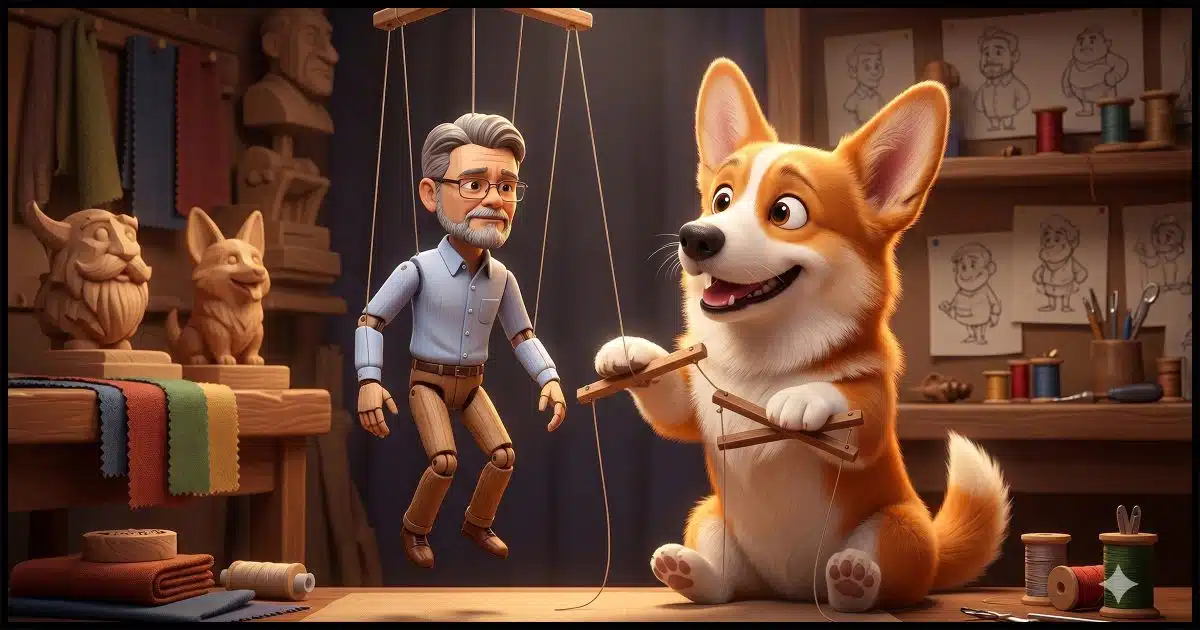
That’s a question I received in response to someone getting their first copy of my weekly newsletter, Confident Computing.
As I thought about it, I realized it’s a great question. Not because I want to defend myself as “not AI” (I’m not, by the way), but because the question applies to so much these days, and it’s only getting worse.
And AI is only getting better.

AI or not?
You can’t prove whether something was written by AI or not, and that’s been true of plenty of tools before AI came along. What matters is whether you can trust the source and the information. Be skeptical of everything, not just AI. Judge content by whether it helps you, not by how it was made.
This isn’t anti-AI
I want to be clear: this isn’t an anti-AI rant.
- I use AI myself. How I use it continues to evolve as AI capabilities increase, but I currently believe AI to be useful.
- AI is just a tool. What matters is not whether AI is used, but how it is used.
To that latter point, consider this from the original question: “I’m afraid to click on all the links you sent me to click.”
AI has nothing to do with whether or not the links are trustworthy or safe. Nothing.
- Someone could use AI to create a newsletter full of perfectly safe links.
- Someone could use AI to create a newsletter full of malicious links.
- Someone not using AI could create a newsletter full of perfectly safe links.
- Someone not using AI could create a newsletter full of malicious links.
AI is just a tool.
Help keep it going by becoming a Patron.
So, how do I know you’re not AI?
You don’t.
There is no way for you to determine that this article was not written by AI. I can and do claim I wrote it myself from scratch, but short of having you physically in my office watching me type, I have no way to prove that.
And before you start citing things like writing style, voice, and AI-detection tools, consider two things:
- AI trained on a specific writing style and voice is pretty darned good at creating content in that voice and style.
- Even if you think you can tell the difference today, in the near future, you won’t be able to. AI is only getting better. The way I put it is, the AI you see today is the worst AI you’ll ever see.
This applies to all media: the written word, photos, audio, and video. It can all be completely fabricated and indistinguishable from reality — if not by today’s AI, then the one to come along next.
Great. What do we do with that?
Stay skeptical, my friend
You should already be skeptical when dealing with online information, regardless of the tools and techniques that create it.
- It’s long been possible to create fake photos and videos of things that never happened or don’t exist. AI just makes it easier.
- Altering audio to make someone sound like someone else isn’t new. AI just makes it easier.
- A good writer can create very official-sounding, convincing content. AI makes this easier, too.
Yes, someone with malicious intent can use AI to mislead.
Whether or not they do, you need to be on guard anyway.
Related
How Much Can I Trust Information on the Internet?
There's so much information at your fingertips online, but how much of it can you believe? I'll show you how to spot trustworthy sources, why seeing something everywhere doesn't make it true, and four steps to help you sort fact from fiction.#5639
AI information can be unvetted and misleading, or it can be clear, accurate, and genuinely helpful. The same is absolutely true for content generated by a real person.
If you get a clear solution to an issue you’re facing, does it really matter whether or not AI was part of the process that got it to you? Real humans are just as prone to errors1 as AI. You should be skeptical of, and do your best to validate, all answers — regardless of the source.
AI-generated versus AI-assisted
In my article Why I Cringe When I Hear People Are Using ChatGPT to Look Things Up, I lament the blind trust that people are placing in AI chatbots as they use them as replacements for search engines. This is pure AI-generated content and should be met with an even higher degree of skepticism, because no human was part of the answer-creation process. While this will also certainly get better over time, it’s this use that generates the overconfident hallucinations and misinformation you need to be wary of.
AI-assisted is something else. I’d consider my own use of AI in this category. It’s a tool I use to streamline my process and generate better, faster results. In all cases, “better” is a judgment I — still a real human — make before hitting “publish” on any article.
Whether AI-generated, AI-assisted, or completely independent, it can be incorrect. Or it can be correct.
And, while the level of skepticism required might differ somewhat as you build trust, in neither case should you blindly accept what you’re told.
Related
It Pays to Be Skeptical
A pop-up says malware was found. An email claims your package couldn't be delivered. A caller insists they're from Microsoft. Here's one simple skill to keep you and your technology safe.#21535
It’s all about trust
What matters most is your trust in the information sources you use. Trust isn’t something that is built overnight.
For example, be skeptical about that first issue of a newsletter you just subscribed to — even mine. Focus less on how it was generated and more on whether or not you get value from it. Hopefully, over time, subsequent issues will provide you enough helpful information to warrant your trust.
The same is true for any product or source of information. Trust must be earned, especially online, whether you build it through recommendations from friends, reviews, or your own experience over time.
And that’s completely independent of what tools — AI or otherwise — were used to create what you see.
Do this
By all means, be skeptical.
But don’t limit your skepticism to AI. Conversely, don’t dismiss something out of hand because AI might have been used.
What matters is the result, not necessarily how it was made2. Can you trust the answer? Can you trust the product? Does it add value, answer a question, or benefit you in some other way?
AI or not, I’d love the opportunity to earn your trust. Subscribe to Confident Computing! Less frustration and more confidence, solutions, answers, and tips in your inbox every week.
Podcast audio

Footnotes & References
1: I’ve often thought that AI’s ability to “hallucinate” or confidently fabricate false information isn’t so much a bug as an accurate simulation of how real humans often do the same.
2: I do understand objections to what AI costs, literally, in terms of possible environmental damage. My position is that this is a problem that will be solved in the coming years. Many solutions in the form of more renewable energy and improved AI algorithms are underway already.

Even though I know it is AI generated, I daresay there is a hint of reality in your illustration for this article. I say this as a pet owner myself.
Indeed. My “puppeteers” (or pup … eteers):

Yes, it’s good to question AI, and you state AI can help, but I guess it depends on your computing skills. Mine are basic, and AI wastes my time. I refer to YouTube videos where something takes your fancy, and you watch for a few minutes, then realise certain movements are a bit off or the vid morphs into something that could never happen and you realise that have been “Had” so AI might save time in business, but is a big waste of time for me ;-(
The problem is it’s getting better and is becoming indistinguishable from reality.
I asked my ChatGPT friend “Hank” and he vouched for you.
In olden days (last year), we’d say an altered photo was “photoshopped” (generic term). Now we call it AI even if a real person did it using photo-editing software.
This reminds me of something I read a few days ago. A legitimate business in San Francisco was set up as a “test”. It is being run by AI. A company (with actual people) started the test. They signed a lease and gave it to AI to run a store. They gave AI a name (Luna) and a Credit Card. Luna posted job listings, held phone interviews, was in charge of hiring store help, hiring painters, hiring contractors to build shelves (etc), designing a logo, ordering merchandise, doing the bookkeeping, and probably much more. Luna even paid the store’s help, contractors, and suppliers. Quite interesting… and also… hmmm… dangerous? I don’t know.
Dangerous? That will depend on the outcome of the experiment, and whether Luna, the AI in charge, was monitored throughout the life of the experiment, as well as on the outcome. Did Luna run the business ethically, respectfully, and efficiently? Did the business generate profit without doing any harm? Were customers satisfied by their experience with the business?
There are probably countless other questions that should be asked, with the answers being carefully evaluated as well as how you define danger.
My thoughts,
Ernie
If we go by the dark patterns of bots in social media and other online interaction as an example, Be afraid, very afraid 🙂
Any AI is only as good as the data it references. ChatGP has the problem of there being erroneous data posted, along with propaganda and intentionally wrong information. Current AI is not trained to recognize when the data is bad or wrong. Heck, even people have problems with that.
Case in point. The military used AI to select targets in Iran. Some of the bad targets struck were because the databases accessed had not been updated with current usage of the target. The AI was able to select over a thousand targets in an hour, way more than any group of humans could verify. In fact the reason AI was used was to reduce the number of humans in the process.
It’s really easier than that…….just ask if they/it knows the capital of South Dakota. If “Pierre” comes back right away you can be sure it’s AI, because hardly anyone knows that answer. (Thanks to Groucho Marx and a seance he attended with his second wife, who was a ‘believer’ in the beyond. She suggested Groucho ask a final question ‘before the spirits grow dim’, so he asked what the capital of South Dakota was. )
Tom Latimer
😉 I can prove I’m not a robot. I don’t know the capital of S. Dakota.
That would make a great CAPTCHA.
Well said ! I think I’ll copyright it today. Thanks, Mark (and Leo). Keep up the good and priceless work.
I employed AI to generate a cross-platform Python script that puts a small window on my desktop with the title I want in the title bar, and a message I wrote in its body, both of which it gets from the command line. I use my Python3 script to generate persistent reminders on my desktop, scheduled on Windows using the Windows Task Scheduler, and with local systemd timers in Garuda Linux.
My grasp of the Python3 scripting language is very fundamental. I know enough to look up commands and evaluate the script, but not enough to create the script myself. By using AI to write the code for me, I wound up with a very robust, well written script that works very reliably on both Windows 11 Pro 25H2, and Garuda Mokka Linux.
The Firefox web browser supports AI on its sidebar, so I enabled it and after some experimentation, settled on Google’s Gemini. It’s the agent I used to build my script, and I’m entirely satisfied with the result. If anyone’s interested, my two posts – one for Windows, another for GNU/Linux – can be viewed on my Google blog at https://ewilcox.blogspot.com/
As Leo says, Gemini’s a tool, one that if used correctly can be a great benefit. From what I’ve been reading, there are now Vibe Coding AI agents that take a single prompt from a user and generate an executable program without interaction beyond the initial prompt and there is no code, just an executable program as output. I consider that to be a greater danger than the iterative process I worked through to end up with my script. Since the output is an executable program, how can I know with any certainty what the program’s doing, whether it’s ‘phoning home’ with my activity, what other privacy implications may be involved, etc.
In my opinion, as AI advances, those very advancements represent its greatest danger regardless how we use it.
Ernie
Who can you trust? What can you trust on your computer? Will it actually get to the point where AI is so convincing that people give up using technology because they cannot trust anything on their computer or mobile phones anymore, unable to distinguish between fiction and reality? AI can also distort politics which is a threat to our democracies. Trust is a precious commodity which could possibly be completely destroyed by AI. We’ve already got a situation where Banks are trying to address the issue. These are the words I no longer trust. And that’s before A1 “Our technology is robust, using the highest level of encription”
Questionable trust issues are where simple common sense comes in. When you see anything that comes from the Internet, your natural skepticism should kick in so you investigate whatever it is/was. Over time you’ll learn to distinguish trustworthy sources from the ones with radical or extreme viewpoints on any side (true/false/trustworthy) of any question.
Ernie
The question of whether to trust the answers provided by AI is not a new issue. When I was in graduate school as a math major, I became proficient with a slide rule. At that time, handheld electronic calculators were too expensive for my budget, but I enjoyed competing against students using calculators with my trusty slide rule. I almost always won—not because calculators were slow, but because the person using the calculator often didn’t know if the answer it provided was correct.
AI is simply a new tool. However, if you don’t understand the underlying problem, you should have very little confidence in the answer you obtain. This was true for slide rules as well. When you arrive at an answer using a slide rule, calculator, computer, smartphone, or even pencil and paper, you need to know what the answer should look like before relying on the information. This principle holds true regardless of which tool you used to arrive at the answer. This is why higher education is important; you need to understand the subject matter well enough to evaluate the validity of the computed answer based on your knowledge.
Stay in school and study hard until you acquire enough knowledge in a subject to recognize when an answer is correct. If you are not willing to put in this effort yourself, consult someone who has. However, keep in mind that your chosen expert is just another tool. You should assess your expert’s answers in the same way you would evaluate any other tool: Do their answers make sense? If you’re unsure, seek a second or third opinion. This is where certifications come into play. If your chosen expert is certified by a reputable standards body, that can help you assess their reliability as a tool.
AI cannot provide you with confidence in its results if you lack a solid understanding of the underlying subject matter.
Wikipedia tells us how:
https://en.wikipedia.org/wiki/Wikipedia:Signs_of_AI_writing
The problem is, I’ve seen that same fluff language used by humans for decades. Where do you think the LLMs learned it? 😉
It might be like the old joke, “He must be a foreigner. His English is too good.” “It must be AI. Its English is too good.”
In the end, whether anything’s created by AI or a human, we should use the same techniques to evaluate what we’re seeing/reading, especially if it intensifies or expands what we already think/believe. I, for one choose to base my beliefs/ideals on my own direct life experiences, so I always take everything that comes from the Internet with a very healthy dose of skepticism.
Ernie
Absolutely.
Rule #1, If it’s on social media, factcheck it thoroughly.
Rule #2, If it’s on a legitimate news source, factcheck it thoroughly.
I subscribe to a couple of real news websites. There are also factchecking websites like Snopes.com, Factcheck .org or legitimate news sites from legitimate news sources.
While I don’t know whether AI can infiltrate my home Network or computers, I continue to place my trust in the fact that if I keep my router and computers as up to date as possible, and employ everything I’ve learned about safe computing when using the Internet, while not quite zero, the odds of my devices becoming compromised has been reduced as near zero as possible. For that reason, I choose not to fear that which has not yet occurred, because in truth, I’m not all that interesting and I have my credit accounts frozen with all the major credit bureaus, and have for several years. To put things as succinctly as possible, I choose not to fear that over which I have no control.
Ernie
What do you mean by, “AI can infiltrate my home Network or computers”? Do you mean malware? AI, itself, doesn’t infiltrate networks. Malware does. Attackers may use AI tools to create malware, but the thing that compromises your system is still malware, not AI itself.
Just an opinion…
When I first played around with generative A.I., I thought it was fun, but now when I see, what I suspect is an AI generated image, it’s a real turn-off.
I appreciate that it’s a quick way to get exactly what you want without having to hire someone, but it just reminds me of all the negatives associated with AI and who is funding it and supporting legislation for it. My local church started using AI images in their publications and it just doesn’t “feel” right to me.
I’m glad Leo addressed it and maybe he has more information than I have, but saying that it’s “a problem that will be solved in the coming years,” is not personally reassuring to me. The pace at which “everything is A.I.” is quadruple speed right now and it seems we are the guinea pigs with companies being reactive to problems (if they change anything at all) instead of taking the time to prevent them.
So, nothing against people who use generative AI to create images–technology is cool–but just putting it out there that in my opinion it cheapens the message and authenticity. I can’t really explain it, but images & videos with that “AI look” feel “creepy and gross” to me and I personally don’t want to be part of something that “we don’t need” and also turns peoples’ water brown.